Guide to Sustainable Parenting
Raising children today comes with unique challenges, but this guide to sustainable parenting provides practical ways to nurture kids while caring for the planet. Parents have a powerful role in shaping eco-conscious habits early, from everyday routines to mindful decisions about food, clothing, and energy use. Each small action contributes to a larger impact, teaching children responsibility, empathy, and awareness. By adopting sustainable practices, families can build routines that are meaningful, manageable, and inspiring.
This article will guide you through actionable strategies for sustainable living, helping you and your children embrace habits that make a real difference.
Guide to Sustainable Parenting: A Quick Overview
Families seeking sustainable lifestyles benefit from simple, practical adjustments. These changes don’t need to be overwhelming; gradual steps create lasting results.
Here’s what this guide covers:
- Simple household changes to minimize waste and energy use.
- Eco-friendly clothing choices for children and budget-conscious families.
- Planet-friendly meal options that support health and the environment.
- Ways to engage children in eco-conscious activities at home.
This overview provides a starting point for families eager to make a positive environmental impact.
Understanding Sustainable Parenting
Sustainable parenting combines everyday habits, lifestyle choices, and education to reduce environmental impact. It focuses on teaching children to make thoughtful decisions and fostering habits that last into adulthood. Families don’t need perfection; consistent small actions create meaningful change over time.
Everyday Household Changes
Parents can introduce small but effective adjustments at home to reduce waste. Teaching children to recycle correctly, switch to reusable containers, and avoid single-use plastics establishes routines that stick. Energy-saving habits, like turning off lights, using smart power strips, and limiting unnecessary appliance use, reinforce the value of conservation.
Implementing household waste strategies empowers children to take part in eco-friendly routines naturally. For example, a family might designate a bin for reusable items, encourage composting of kitchen scraps, and involve children in organizing household recycling. These practices not only reduce waste but also create teachable moments about the planet’s resources.
Eco-Friendly Clothing Choices
Clothing can have a surprisingly large environmental footprint. Parents can encourage sustainability by shopping at thrift stores, swapping outgrown clothes with friends, or choosing garments made from organic or recycled materials. Teaching children to care for and mend their clothes fosters responsibility and reduces unnecessary consumption.
Opting for eco-friendly clothing choices demonstrates that sustainability is attainable and stylish. Parents might involve kids in selecting fabrics or planning outfits that last, turning shopping into a learning experience about materials, production, and waste reduction. Over time, children internalize these habits and make mindful choices independently.
Energy-Saving Practices
Beyond waste reduction and clothing, conserving energy at home is essential. Simple actions like using LED bulbs, regulating thermostat settings, and limiting water heater use can significantly reduce household energy consumption. Involving children in tracking energy use or creating fun charts of electricity-saving achievements makes learning interactive. These efforts teach children that every small action contributes to a larger environmental benefit.
Sustainable Food Practices for Families
Food choices impact both personal health and the environment. Planning meals with sustainability in mind allows families to teach children the connection between eating habits and ecological outcomes.
Planet-Friendly Meal Options
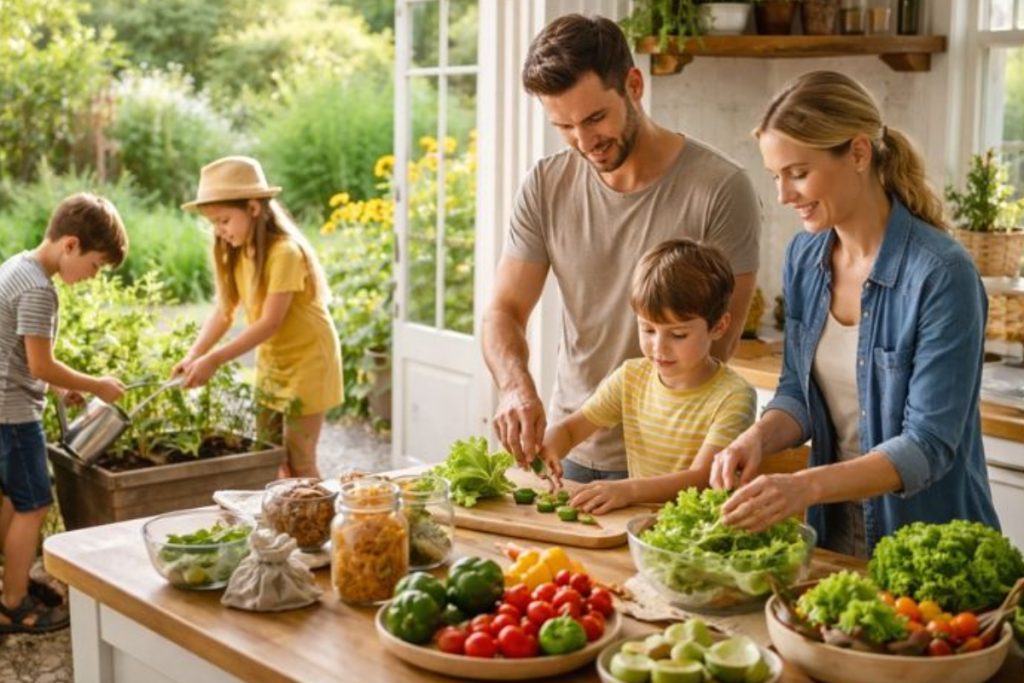
Incorporating more plant-based meals, reducing red meat, and choosing seasonal produce help lower a household’s environmental footprint. Cooking together allows children to learn about nutrition, sourcing, and the environmental effects of certain foods. Preparing planet-friendly meal options can be a creative experience, with kids helping to plan meals, chop vegetables, or pack lunches in reusable containers.
Teaching Children Through Involvement
Hands-on participation helps children understand why sustainable practices matter. Involving them in grocery shopping, meal prep, or composting turns learning into an engaging activity. Kids can identify which foods are more eco-friendly, track leftovers to minimize waste, or help sort compostable items. These experiences build pride in their contributions and create habits that endure into adulthood.
Reducing Food Packaging Waste
Packaging contributes significantly to household waste. Parents can reduce packaging waste by choosing bulk items, bringing reusable bags, and selecting minimally packaged products. Teaching children to recognize packaging alternatives and make thoughtful selections fosters environmental awareness. Over time, these choices become second nature, helping children understand that sustainable shopping habits begin with simple, everyday decisions.
Raising Eco-Conscious Children
Beyond habits, sustainable parenting emphasizes education and awareness. Children learn best when they observe behaviors, receive explanations, and participate actively.
Activities and Education
Interactive activities make sustainability memorable. Gardening, participating in local clean-ups, or starting simple home recycling projects teaches responsibility. Reading age-appropriate books, watching conservation documentaries, or crafting with recycled materials adds depth to learning. These hands-on activities make eco-conscious principles tangible and fun.
Balancing Sustainability and Practicality
Sustainable parenting is about consistent effort rather than perfection. Families face constraints in time, budget, and convenience, and that’s normal. Gradually implementing achievable goals, like reducing energy use, limiting disposable products, or preparing plant-based meals, ensures lasting change. Children learn that sustainability is manageable and not overwhelming, encouraging lifelong habits.
Encouraging Sustainable Play
Playtime provides opportunities to teach eco-consciousness. Choosing toys made from natural or recycled materials, encouraging creative reuse, and spending time outdoors all contribute to sustainable development. Activities like building forts from reusable materials, crafting with scrap items, or exploring nature help children enjoy play while internalizing environmental responsibility.
Guide to Sustainable Parenting: Nurturing Families and the Planet
Adopting sustainable practices at home allows families to live thoughtfully and responsibly. Through simple household changes, eco-friendly clothing choices, and planet-friendly meal options, parents can instill values that last a lifetime. Encouraging children to participate in environmental activities reinforces lessons and builds confidence.
For families seeking deeper insights into the effects of daily routines on the planet, understanding household environmental impact provides valuable guidance. Learning how energy use, waste, and consumption affect the environment can inspire thoughtful choices in everyday life.
Sustainable parenting blends mindful action with care and awareness. By following this guide to sustainable parenting, families can create routines that are practical, meaningful, and impactful, helping children develop habits that benefit both themselves and the environment.